


Cautious Climate Hope
by Fr. Chris McPeak, Rector
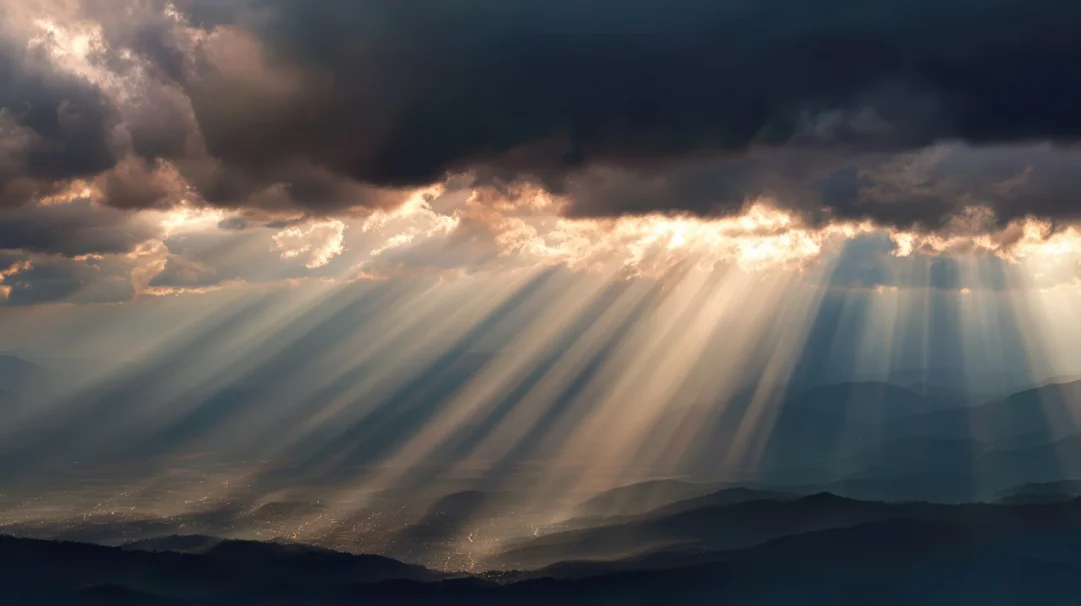
Last week my daughter’s class had an assignment: go outside after school, look up at the sky, and draw what you see. It was uneventful. The sky was a solid sheet of grey clouds. When we got back inside, we talked about what she saw. “The sky is mad,” she insisted. “How so?” I asked. “It’s all grey and dark. It must be mad.”
My science-oriented mind kicked in, and I explained that the sky (and all weather, for that matter) doesn’t have feelings. It simply is. Changes in color, wind patterns, rain, or snow are just the laws of physics at work.
Obviously, this was unsatisfactory. She glared at me. “It’s mad.”
I’m not willing to anthropomorphize the sky, but she did get me thinking. Over the past many years we have watched storms grow stronger, global temperatures climb, wildfires intensify, and sea levels rise. As we’ve traveled through this Season of Creation, I’ve been sitting with how genuinely frightening it is, what human activity has done to our world.
And yet. The Seattle Times ran an article this week that caught my attention. During New York Climate Week, former Vice President Al Gore said he believes 2026 may be remembered as the beginning of a positive tipping point. Africa is now installing 100,000 solar panels a day. Ninety-one percent of new U.S. electricity generation this year was renewable. 30% of all new cars sold globally this year will be electric. And, in Pakistan, a common wedding dowry now includes three solar panels.
Gore is honest that it’s a close race. Scientists point out that clean energy is still mostly meeting new demand rather than replacing fossil fuels. But the University of Pennsylvania’s Michael Mann warned that the greatest threat to progress right now is “doomism, despair and disengagement.” We must keep hoping, we must keep working, we cannot give up.
Gore closed with one of my favorite lines from the Jewish Mishnah: “You are not required to finish the work, but you are required to undertake it.”
I think that exemplifies shape of Christian hope. It isn’t optimism, and it doesn’t ignore the grey skies. Saint Paul wrote that the whole creation groans as if in labor pains. Those are the groans of something being born, not of something dying. As we end this year’s observation of the Season of Creation I hope you will carry with you the idea that healing creation is work God invites us into all the time: by conserving, advocating, repenting, and planting.
My daughter may be wrong about the sky being mad. But she is right that it is worth looking up and paying attention. The grey skies are real. But so is the light behind them.
Peace,

NEWS & MESSAGES
Run (Towards Peace)
Run (Towards Peace) by Fr. Chris McPeak, Rector Dear Good Samaritans, Another
Transgender Day of Remembrance
Transgender Day of Remembrance by Fr. Chris McPeak, Rector Dear Good Samaritans,
Chorus of Generosity Begins
Chorus of Generosity Begins by Fr. Chris McPeak, Rector Link to Spotify Playlist
Rounding Our Square Halos
Rounding Our Square Halos by Fr. Chris McPeak, Rector
We Need Each Other
We Need Each Other by Fr. Chris McPeak, Rector Dear Good Samaritans,
Season of Creation 2025
Season of Creation 2025 by Fr. Chris McPeak, Rector My Dear Good
About Our Contemplative Morning Eucharist
About Our Contemplative Morning Eucharist by Fr. Chris McPeak, Rector What is a
What We Can Learn From Frogs and Kids
What We Can Learn From Frogs and Kids by Fr. Chris McPeak, Rector
Scholarship Reception
Scholarship Reception by Fr. Chris McPeak, Rector My Dear and Giving Good Samaritans,
Summer Schedule
Summer Schedule by Fr. Chris McPeak, Rector Dear Good Samaritans, First of all,
The Sun Will Rise
The Sun Will Rise by Fr. Chris McPeak, Rector This week my
The Deacon’s Corner: A Poem by Kathryn Ballinger
"What Do the Palms Say?" by Deacon Kathryn Ballinger What do the palms say?